

As dull as the headline sounds—“El Salvador adjusts its Bitcoin law”—what lies beneath this news is one of the most significant cases of submission in the short history of cryptocurrencies. The country that bragged about defying the global financial system has bent the knee before the International Monetary Fund (IMF).
It was more than just a legislative update. It was the implicit admission that the Herculean experiment had failed under its original conditions. But what really went wrong, why the IMF was right, and what lessons we all can draw when looking without fanaticism and with numbers.
The IMF Doesn’t “Suggest,” It Demands
Let’s put some context. El Salvador currently desperately needs a loan of US$1,400 million from the IMF to avoid a debt crisis. Of course, the IMF wouldn’t lend such a sum to a country that is “playing roulette” with its reserves.
So, the “recommendations” were in fact an ultimatum: “Either shut down the Bitcoin fanatics or there’s no money.” Aware of this, Bukele—above all conservative—chose the money. And it was not an act of sovereignty; it was an act of economic survival.
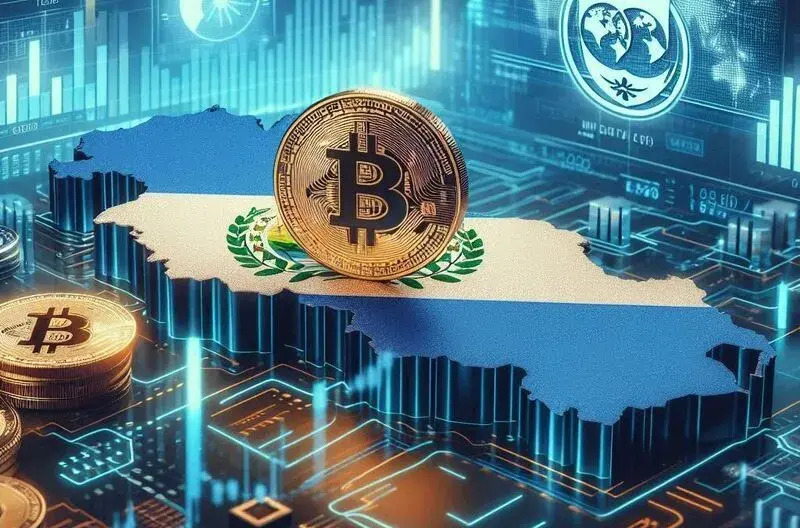
Promises vs. Reality
Bukele sold the Bitcoin Law with epic promises. Three years later, the balance is gray and disappointing:
- ✅ Promise Kept: Global attention. El Salvador put itself on the map. It attracted crypto tourism, conferences, and venture capital. A marketing success.
- ❌ Promise Broken: Financial inclusion. The grand promise was to bank thousands of people. Reality: only 1.5% of remittances in 2023 were sent via Bitcoin. People preferred the dollar, always.
- ⚠️ Painful Reality: Millions in losses. Bukele bought 2,798 BTC at an estimated average price of US$45,000. Due to fluctuating prices, the country has been hundreds of millions of dollars in the red for long periods. He gambled with the people’s money… and lost.
The “Adjustments”
A defeat disguised as evolution. The changes to the law are a strategic retreat forced by the IMF. What matters:
- Bitcoin is no longer de facto legal tender. By allowing merchants to reject payments in Bitcoin, they killed the main characteristic of a currency: being a universal means of payment. Now it’s an optional digital asset—what it should always have been.
- Stability is prioritized over innovation. The new rules for financial entities are pure damage control: KYC (Know Your Customer), AML (Anti-Money Laundering), transparency. Everything the most radical proponents of the original law despised.
Lessons for the World
This Salvadoran experiment leaves brutal lessons for any other country wanting to follow in its steps:
- You cannot force adoption.
- Volatility is a killer for the real economy.
- The traditional system has powerful levers. It doesn’t yield easily.
Conclusion: Failure or Learning?
It would be unfair to call this experiment a total failure. It was necessary and brave, but also an act of imprudent arrogance.
El Salvador showed us the path—but also every pitfall in which it is not worth falling. The future is more likely not to be flashy through proclaiming Bitcoin as legal tender, but through something more organic and mature: where this asset finds its place as part of a diversified investment basket and a well-regulated general banking system.
Surrendering to the IMF is not the end of the story. It is the end of a stupid and optimistic chapter, and I hope the beginning of one that is adult and serious.
What about you—do you believe the experiment was a necessary step despite everything, or a monstrous mistake that should not be repeated? Did President Bukele learn his lesson, or just postpone it for later? I’d really like to know what you think.

